
FAQ
Questions humans ask (dogs already know the answers)
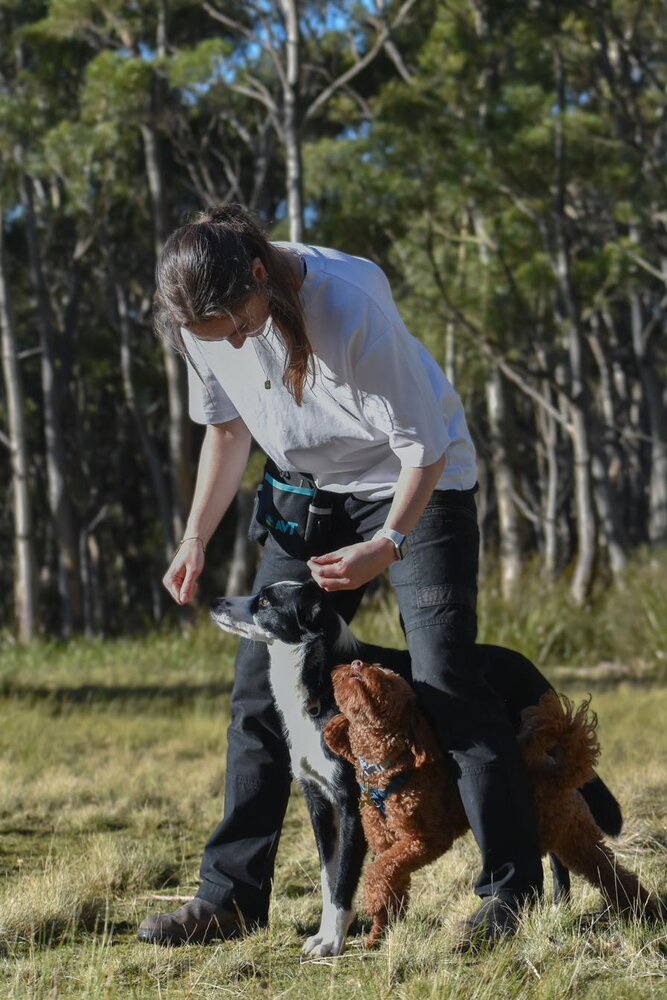
I use reward-based, science-backed training methods, often called positive reinforcement or force-free training. We reward the behaviours we want to see more of, manage the environment so unwanted behaviours don't get repeatedly practised, and always work at a pace your dog is comfortable with.
No, never. I don't use or recommend check chains, prong collars, e-collars (shock collars), spray bottles, or any tool designed to cause fear, pain, or pressure. These tools can suppress behaviour in the short term, but they can damage trust and often create bigger problems. There is always a kinder and more ethical way to train.
I come to you in your home for our initial consultation. Once we've met and made a plan, follow-up sessions may be held at a quiet oval or in an environment that best suits the behaviour we're working on. If you've worked with me before, feel free to get in touch and we can make a plan that suits you and your dog.
Check my service area via the map at the bottom of this page, or open the full map here.
It depends on your goals, your dog, and how much practice happens between sessions. Many owners see real progress within one to three sessions for foundation skills such as manners, lead walking, and recall. After our first consultation, we'll chat through your options and I'll give you an honest recommendation.
Absolutely. In fact, I encourage it. Dogs live with the whole family, so it helps when everyone learns the same language. A parent or guardian must be present so we can keep the session safe and fun for everyone.
Your dog on a flat collar or a comfortable Y-style or H-style harness, a standard lead (no retractable leads, please), a generous supply of small, high-value treats such as chicken, cheese, or Prime100 roll, a favourite toy, water for your dog, and any questions you've been saving up.
I'll bring my own treats as well, so please let me know about any dietary requirements before our session. I'll also bring a few other fun training tools and surprises for you and your dog.
No worries at all. Please give me at least 24 hours' notice and we can reschedule your session 😊
Every dog, every personality
Still curious about something?
No question is too small. If you're wondering, someone else has wondered too.